
11:15 AM | Amazing close-up view of Pluto and now all nine "planets"
Paul Dorian
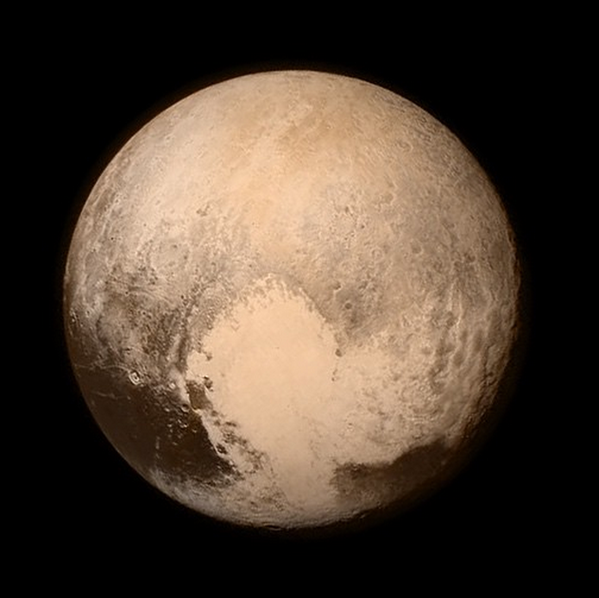
[Final color image of Pluto before the flyby; courtesy NASA]
Discussion
NASA’s New Horizons spacecraft has made the first ever visit to Pluto speeding past at 30,000 miles per hour. This image (above) was taken late yesterday and is the final color image taken just before the flyby from about 476,000 miles away. In the image, we can see the "heart" of Pluto in much greater detail than before, craters that were impossible to make out in previous images, and a great view of the dwarf planet's dark equatorial belt. There are more images of the face of Pluto to come. The first true high-resolution mosaic image will be released tomorrow afternoon, and a few more will be released throughout the week. A much larger set will be released starting in September.
With this close-up view of Pluto that was more than nine years in the making, all nine objects considered by many to the solar system’s planets – from Mercury through Pluto – have now been visited at least once by a probe. This image below features some of the best available viewpoints of all nine planets in the solar system including the very latest of the dwarf planet Pluto (lower right).
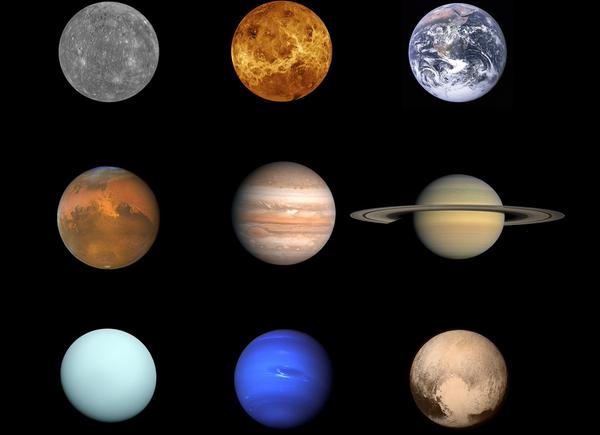
[All nine planets in our solar systems have now been visited at least once by a probe]
One of the interesting findings regarding Pluto based on this close-up view is that the dwarf planet is apparently a bit bigger than previously thought. The diameter of Pluto will be increased by about 20 or 30 miles based on the new data according to NASA scientists. Also, early interpretation of the data suggests Pluto has “a history of impacts” and “surface activity that may be interpreted as tectonic indicating internal activity in the past and perhaps even in its present”. Pluto is quite unusual in that it is a fraction of the size of the Earth and yet has five moons. The dwarf planet slightly orbits the largest moon, Charon, leading some to suggest that the pair could be best described as a double planet system. Charon is about 750 miles across and half the diameter of Pluto – making it the solar system’s largest moon relative to its planet.


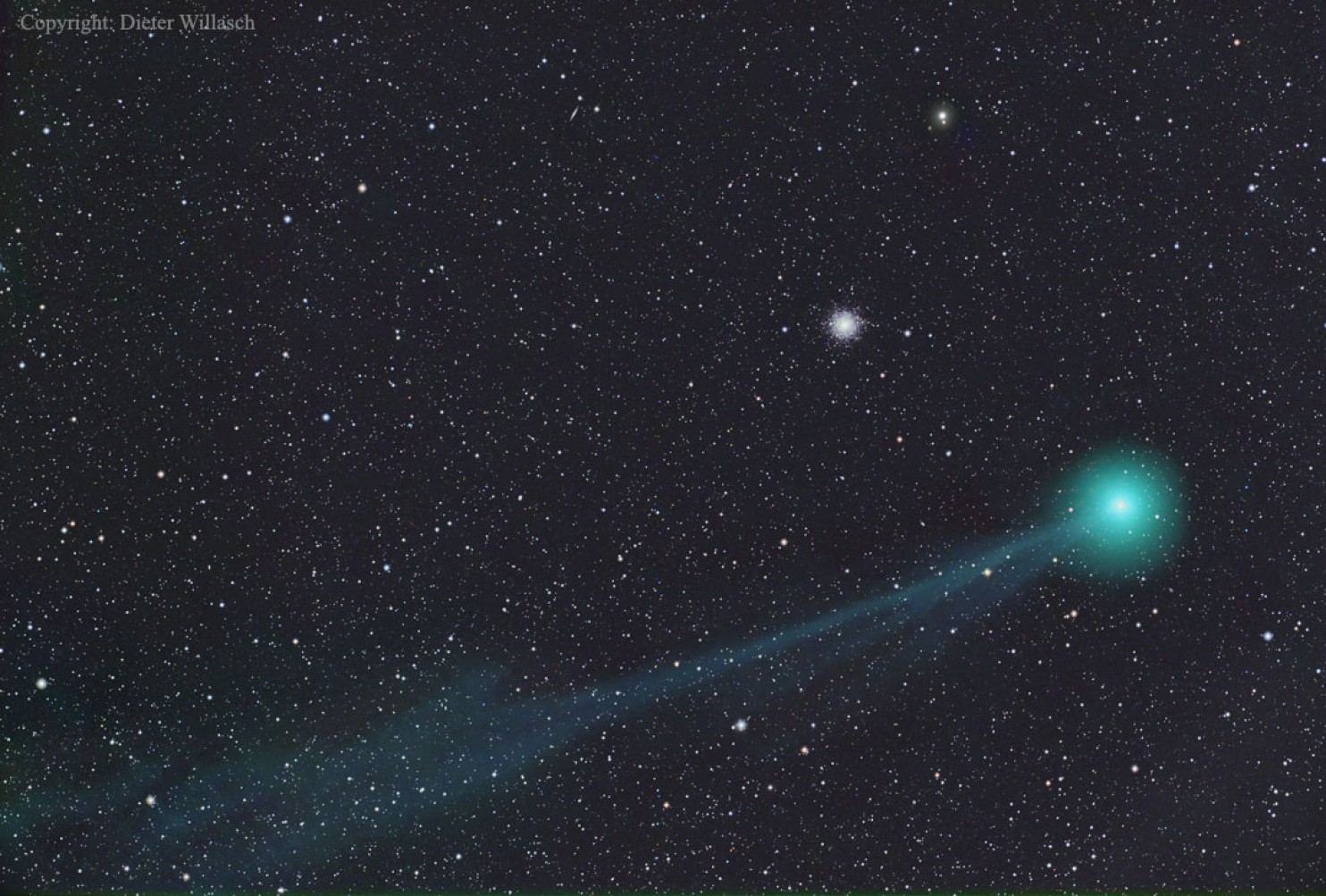 [Image of Comet Lovejoy; courtesy Washington Post's Capital Weather Gang]
 [Finder chart for tonight, January 13th; map courtesy Andrew Ochadlick and heavens-above.com]
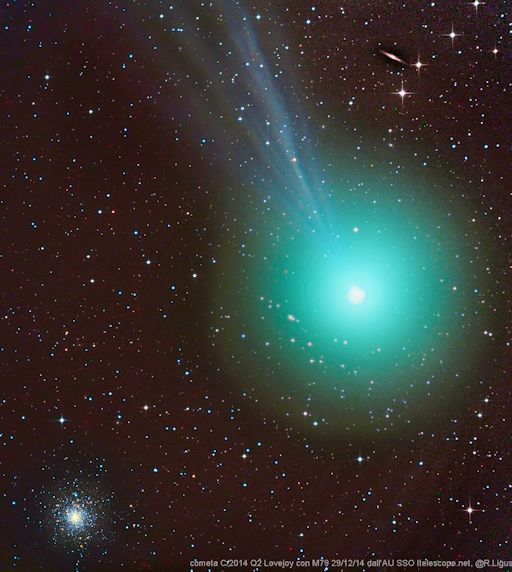 [Image of Comet Lovejoy on 12/29/14; courtesy "spaceweather.com"]
 PHOTO: Comet 67P/Churyumov-Gerasimenko is seen in a photo taken by the Rosetta spacecraft with the OSIRIS narrow-angle camera August 3, 2014.
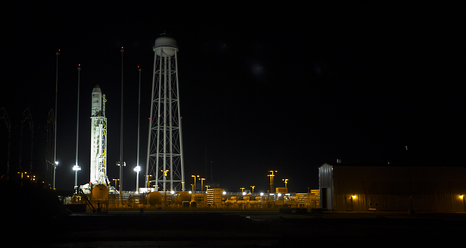 [Antares rocket on launch pad this weekend]
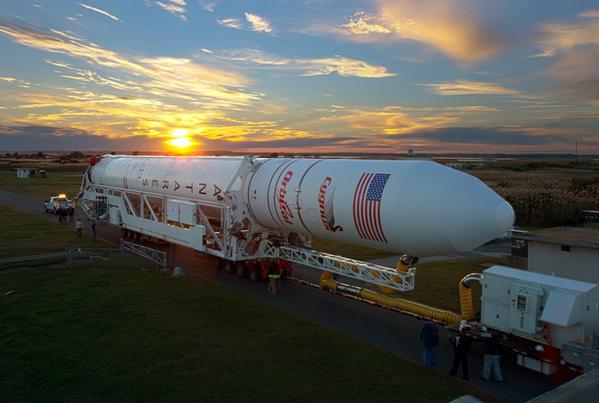 [Another view of the Antares rocket]
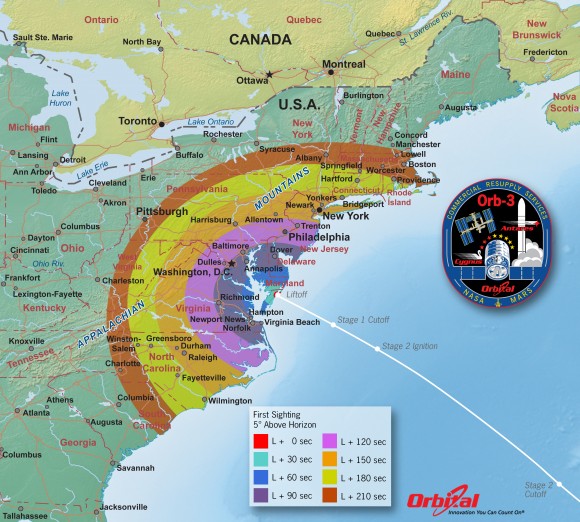 Orbital 3 Launch from NASA Wallops Island, VA on Oct. 27, 2014 - Time of First Sighting Map. This map shows the rough time at which you can first expect to see Antares after it is launched on Oct. 27, 2014. It represents the time at which the rocket will reach 5 degrees above the horizon and varies depending on your location. As an example, using this map when observing from Washington, DC shows that Antares will reach 5 degrees above the horizon approximately 117 seconds after launch (L + 117 sec). Credit: Orbital Sciences