*The annual Perseid meteor shower peaks in the overnight hours of August 12-13 (Wednesday-Thursday)…should be a great show this year in a dark, moonless sky (weather permitting of course)*
Paul Dorian
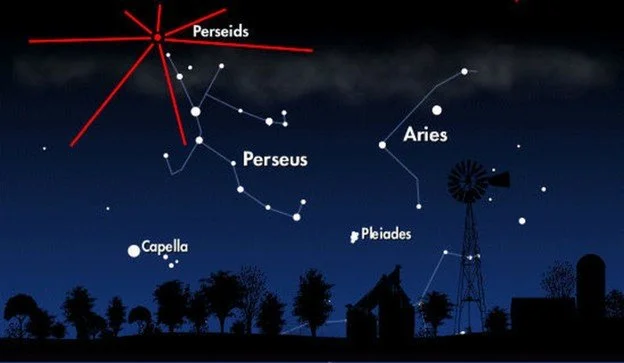
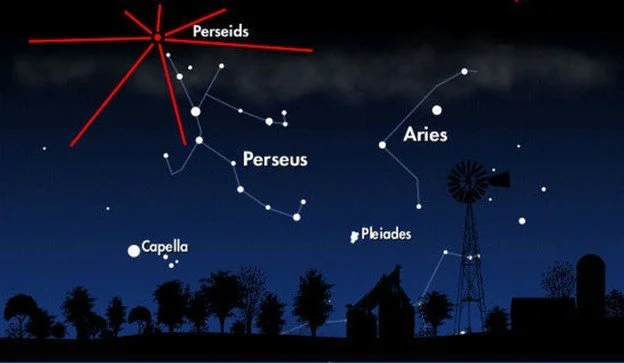
Perseid meteors appear to radiate from the constellation Perseus in the northeast sky. Credit: WSFA 12 News (Montgomery, Alabama) /NASA
Overview
The annual Perseid meteor shower began on July 17th and will continue through August 24th, but the peak viewing times will be the overnight hours of August 12-13 (Wednesday-Thursday) in what promises to be a good show. This year’s peak viewing will come at a perfect time when the moon is “new” meaning there will be zero moonlight to wash out the view. As a result, up to 100 meteors may be seen per hour under dark skies and in a viewing spot away from city light. Of course, all success for viewing will depend on the sky conditions during the peak time period. The Perseid meteor shower comes every August as the Earth passes through a cloud of dust that comes from Comet Swift-Tuttle as it approaches the sun.
Details
The Perseid meteor shower has already begun and will reach a broad peak centered during the overnight hours of August 12th-13th. Meteor rates can potentially reach 100 per hour in rural locations this year as the moon will in the “new” phase meaning there will be no moonlight to inhibit viewing.
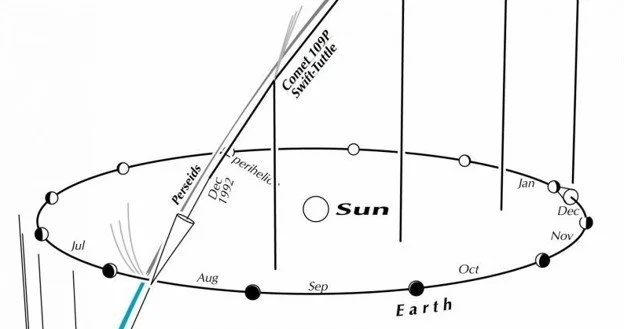
The Perseids happen every year in the July/August time period as the Earth crosses the orbital path of Comet Swift-Tuttle. This comet takes about 133 years to orbit the sun and it last rounded the sun in the early 1990s. Credit Earthsky.org/Guy Ottewell.
Every year, from around July 17 to August 24, our planet Earth crosses the orbital path of Comet Swift-Tuttle, the parent of the Perseid meteor shower. Debris from this comet litters the comet’s orbit, but we don’t really get into the thick of the comet rubble until after the first week of August. Earth's gravity pulls in chunks of small rocks from Comet Swift-Tuttle comprised of iron-nickel, stone, and other minerals. These small rocks turn into bright balls of hot gas when they enter the Earth's atmosphere. As darkness falls, the meteors appear to come from the constellation Perseus, hence the name; although late in the evening, the meteors actually originate higher in the sky than the constellation.
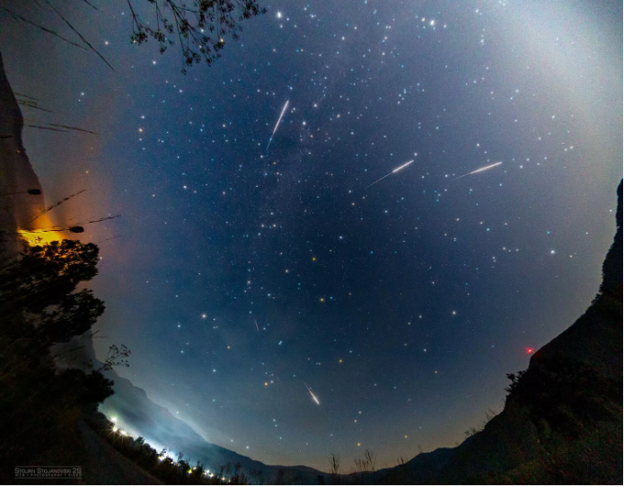
A photo of Perseid meteors seen in 2019 from Macedonia. Courtesy spaceweather.com/Stojan Stojanovski
It is estimated that Perseid meteoroids hit our atmosphere at about 132,000 miles per hour to produce the annual light show and this meteor shower is usually rich in “fireballs” because of the size of the parent comet. Comet Swift-Tuttle has a huge nucleus - about 26 kilometers in diameter - whereas most other comets are much smaller with nuclei only a few kilometers across. Comet Swift-Tuttle has a very eccentric – oblong – orbit that takes this comet outside the orbit of Pluto when farthest from the sun, and inside the Earth’s orbit when closest to the sun. It orbits the sun in a period of about 133 years. Every time this comet passes through the inner solar system, the sun warms and softens up the ices in the comet, causing it to release fresh comet material into its orbital stream. Typically, meteors are only the size of pebbles, some as small as a grain of sand, but Comet Swift-Tuttle produces a large number of meteoroids that are large enough to produce “fireballs”. In fact, the Perseid meteor shower is considered the “fireball champion” of all of the annual meteor showers.
Hopefully, skies will cooperate on the peak night of August 12-13, but if not, there will be other opportunities this year for viewing meteor showers. The next one of note in 2026 will be the Orionids which peak on October 20-22, that one brings about 10-20 shooting stars per hour, and the Geminids in mid-December can generate as many as 150 meteors per hour.
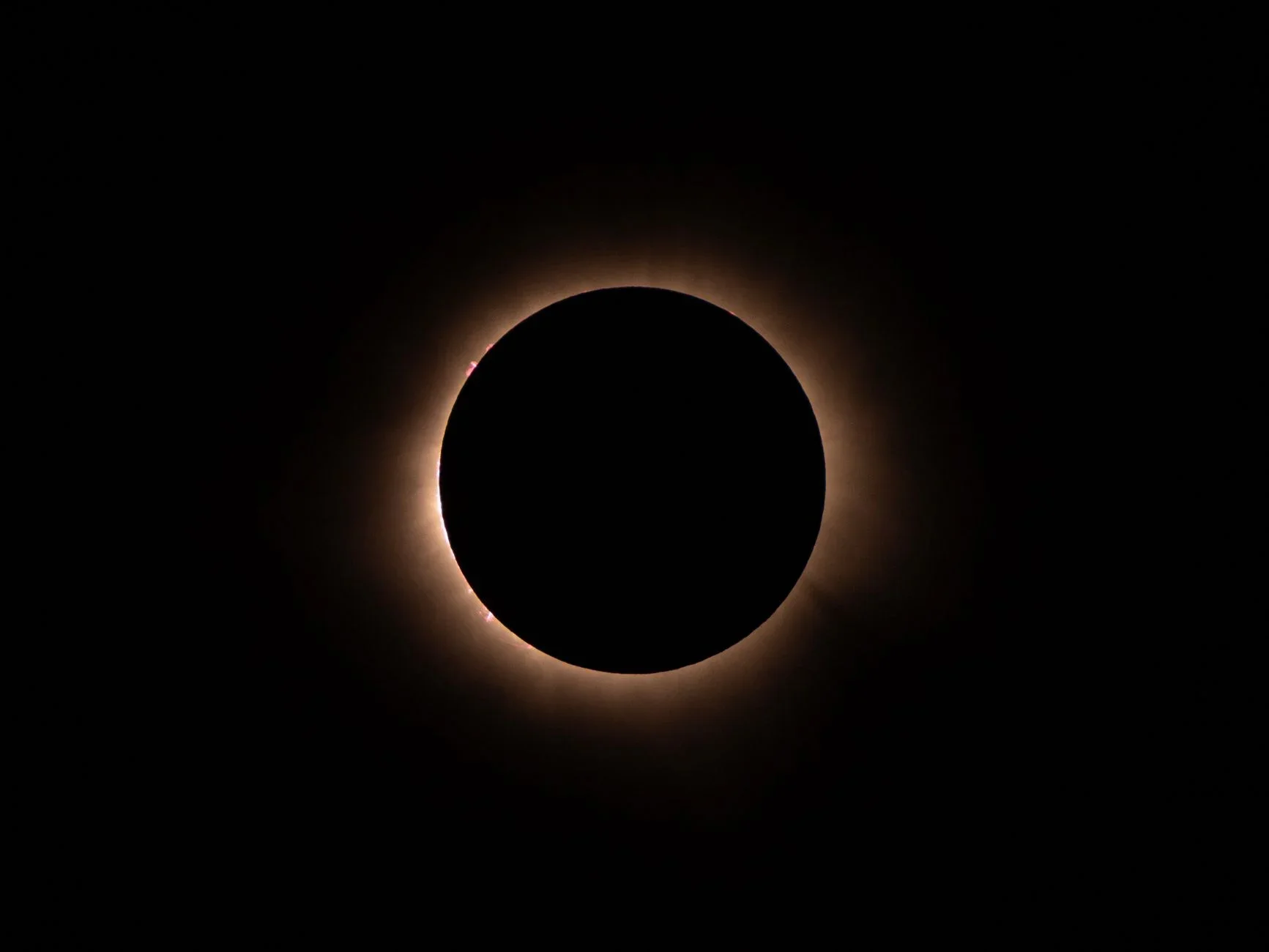
The Sun's corona during a total solar eclipse. Image by Drew Dempsey via Pexels; courtesy spacedaily.com
One final note, on the evening August 12th, 2026, a total solar eclipse will sweep across Spain at sunset and then just hours later, the Perseid meteor shower will reach its peak placing two of astronomy’s most dramatic events within a single extraordinary night.
Meteorologist Paul Dorian
Arcfield
arcfieldweather.com