2:45 PM (Thursday) - ***Severe G4-class geomagnetic storm is underway...auroras possible tonight as far south as the mid-latitudes...best viewing time period included***
Paul Dorian
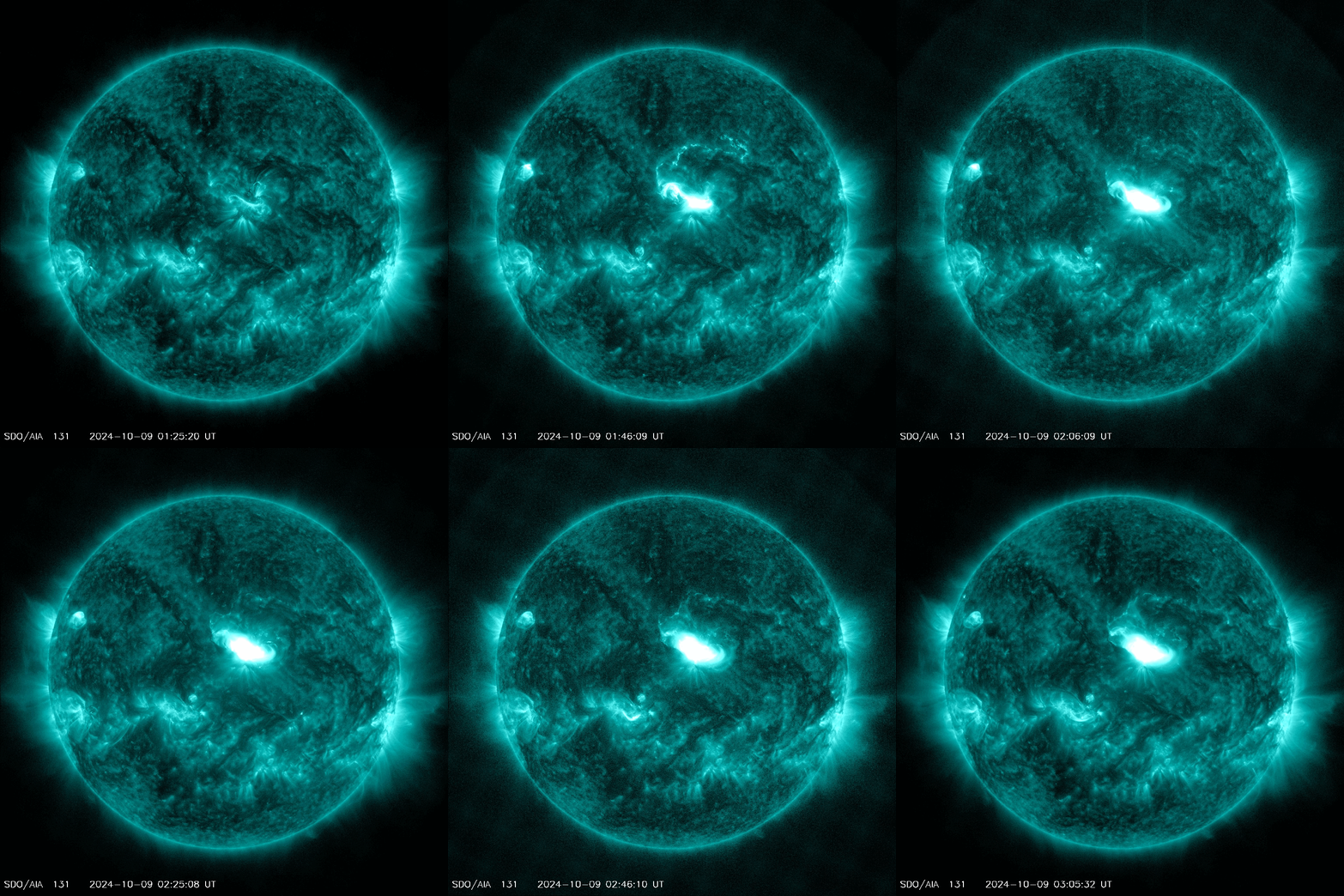
NASA's Solar Dynamics Observatory recorded the extreme ultraviolet flash on Wednesday morning associated with sunspot region AR3848. Images courtesy NASA, spaceweather.com
Overview
Here we go again…in what has been quite an active phase of solar cycle 25, yet another coronal mass ejection (CME) may result in northern lights to be visible as far south as the mid-latitudes both tonight and again tomorrow night. A sunspot region officially known as AR3848 was the origin of this latest coronal mass ejection that took place early on Wednesday. A severe G4-class geomagnetic storm is already underway in that protons are “raining down on Earth” according to spaceweather.com as the energetic particles are being accelerated toward the Earth by the incoming CME. In addition, solar winds have jumped to 750 kilometers per second and a crack is opening in the Earth’s magnetic field. The best viewing time period is probably between about 8pm and 2am (assuming skies are clear throughout those hours) and in the darkest area available to you with a good view of the north.
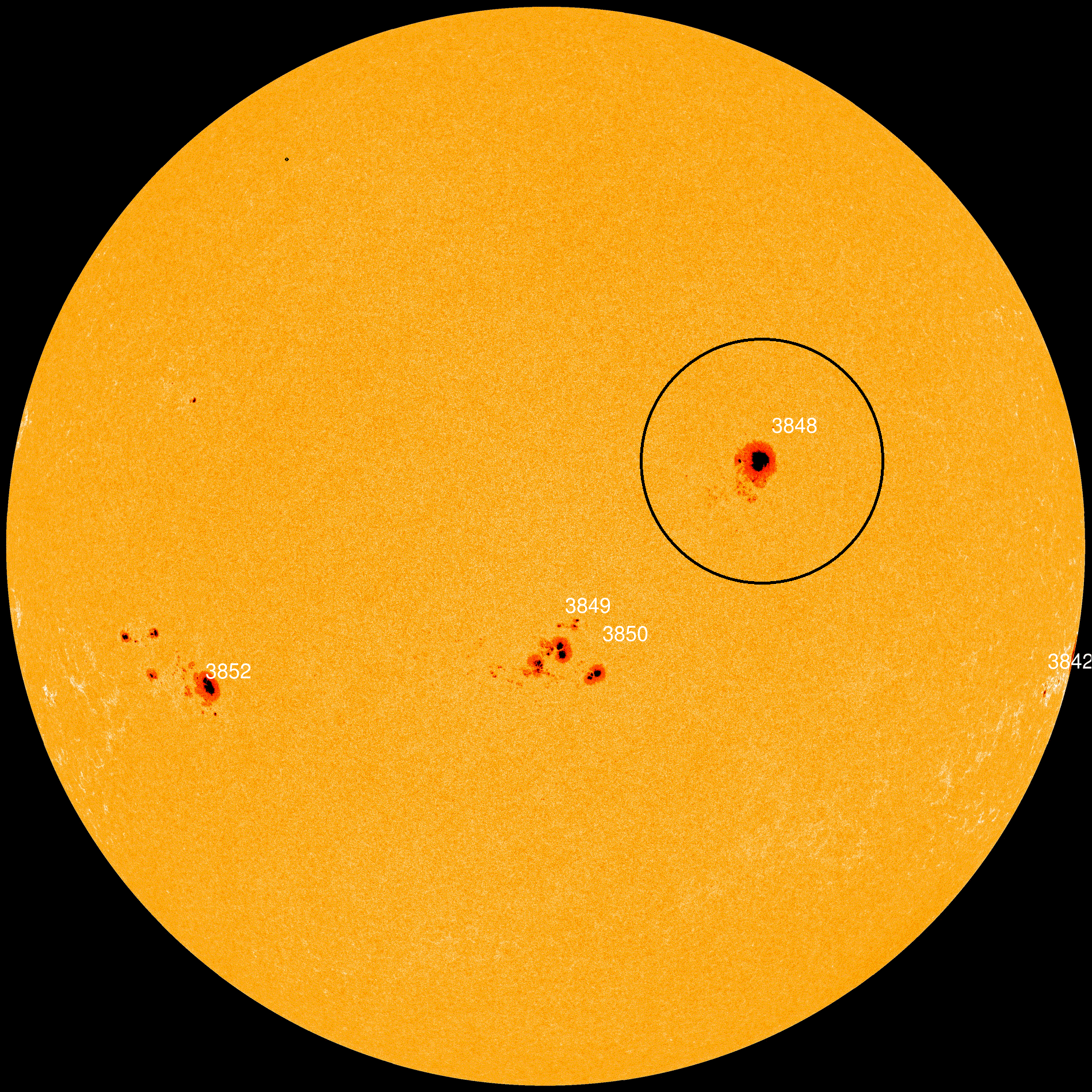
Sunspot region AR3848 (circled) was the origin of the latest CME on Wednesday morning. The sunspot region was facing Earth directly on Wednesday and has since rotated slightly from left-to-right on the above image. Image courtesy NASA, spaceweather.com
Details
There is a chance to view the northern lights later tonight and again on Friday night in mid-latitude locations such as Pennsylvania, Ohio, Maryland and Virginia as the latest CME impacts the Earth atmosphere. Solar cycle 25 is reaching its solar maximum phase with numerous sunspot regions dotting the sun and AR3848 had an ejection early Wednesday as it was directly facing the Earth. As a result, energetic particles now reaching the Earth’s upper atmosphere can produce auroras each of the next couple of nights farther south than is normal. The best viewing time period is probably between about 8pm and 2am (assuming skies are clear throughout those hours) and in the darkest area available to you with a good view of the north.
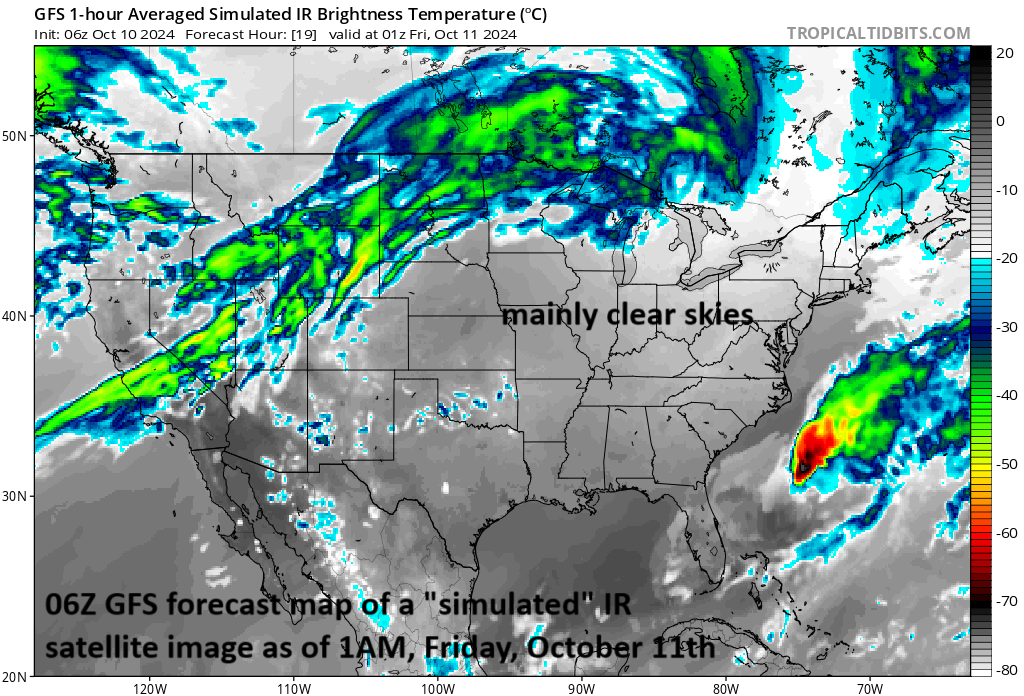
Skies should be cooperative late tonight for the potential viewing of the northern lights across much of the eastern US. With the clear skies, temperatures will drop to their lowest levels of the fall season so far in such places as the Mid-Atlantic region where patchy late night frost will be possible. Map courtesy NOAA, tropicaltidbits.com
As far as the weather is concerned, skies should be quite cooperative for viewing with great conditions across a wide area of the eastern half of the nation. In the Mid-Atlantic region, clear skies should rule, but it’ll be quite chilly for late night viewers. In fact, late night temperatures in the Mid-Atlantic region should reach their lowest levels of the season so far with patchy frost likely for the first time this fall in many suburban locations.
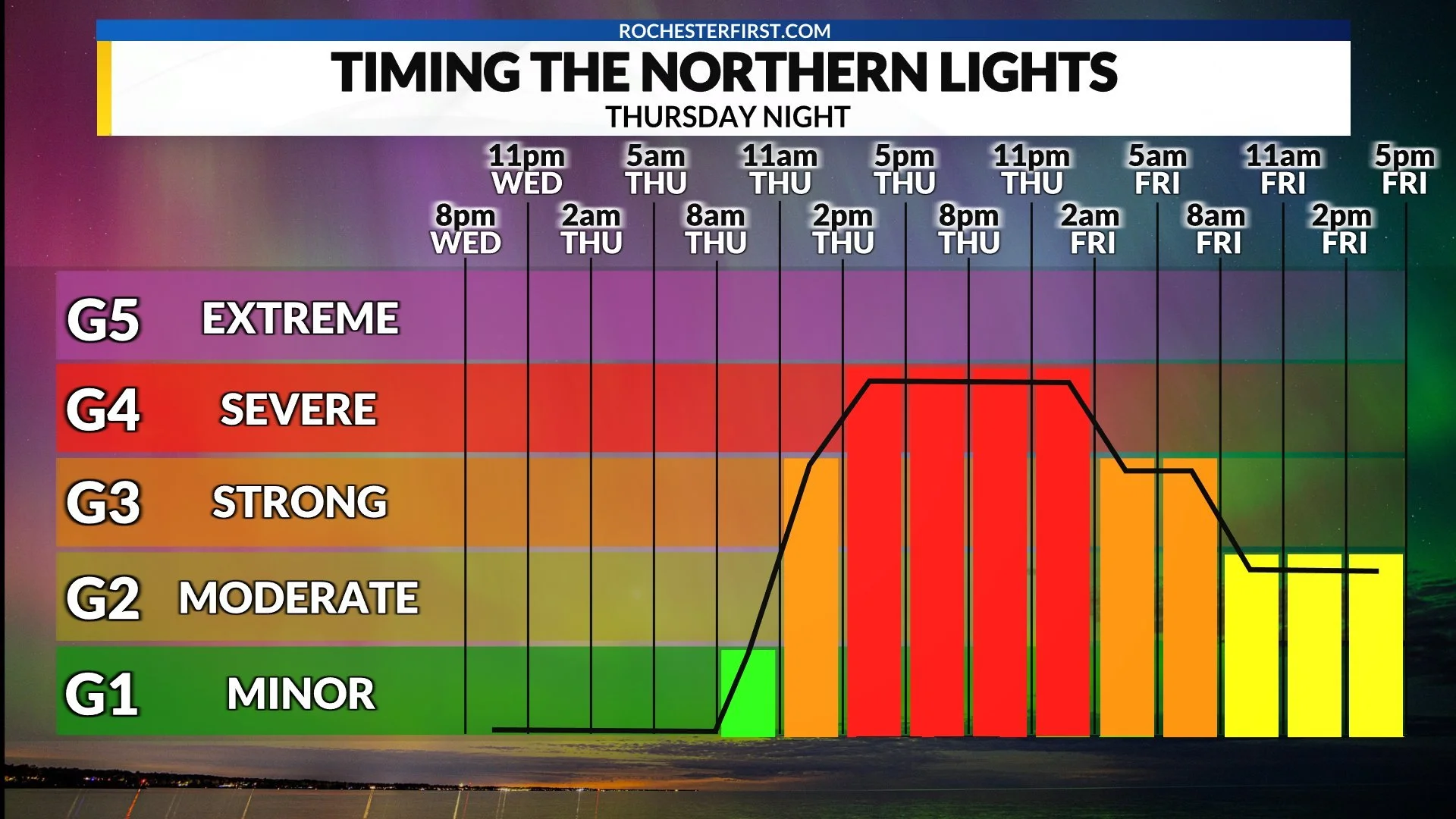
The best time to view the northern lights in this scenario is probably between around 8pm and 2am and in the darkest area available to you with a good view of the north. Plot courtesy "rochesterfirst.com"
This uptick in solar activity during the past several weeks comes as Solar Cycle 25 near its maximum phase which is likely to be reached sometime in 2025. Solar Cycle 25 began during December of 2019 and is expected to continue until around 2030. The cycle is characterized by the sun’s transition from a relatively calm state to one that is active and then back to quiet again...often over about an 11-year time period. There has not been a single day in 2024 or 2023 that featured a spotless sun and only one such day took place in 2022. During the last solar minimum phase in 2019, there were 281 spotless days which made up 77% of the year.
Meteorologist Paul Dorian
Arcfield
arcfieldweather.com