*History in the making if there is no Atlantic hurricane by Saturday...positive benefits of a strong El Nino…no landfalling hurricane in the US since October 2024*
Paul Dorian
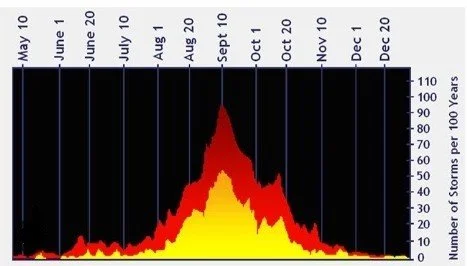
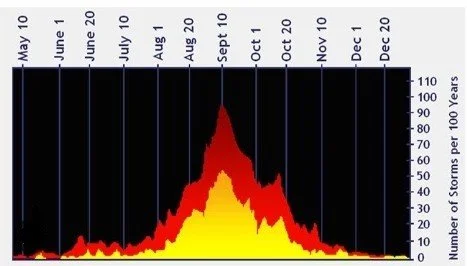
From a climatological point of view, the peak of the Atlantic Basin tropical season comes right around the 10th of September when sea surface temperatures are near their peak in much of the Atlantic Ocean’s Main Development Region. Plot courtesy NOAA
Overview
A strong El Nino in the equatorial part of the Pacific Ocean can have several positive benefits including a typically quieter Atlantic Basin tropical season and this tranquil season is on the verge of making history. Indeed, if no hurricane develops in the Atlantic Ocean by Saturday, September 12th then this would be the latest time without one this late in the season in the satellite era which dates to 1966. There have been two prior tropical seasons in the satellite era with the first recorded hurricane happening on September 11th (Gustav in 2002 and Humberto in 2013) and while nothing is certain when it comes to the weather, this record appears all but certain with no development expected into the weekend. The climatological peak of the Atlantic Basin tropical season is right around the 10th of September and there is currently no activity whatsoever.
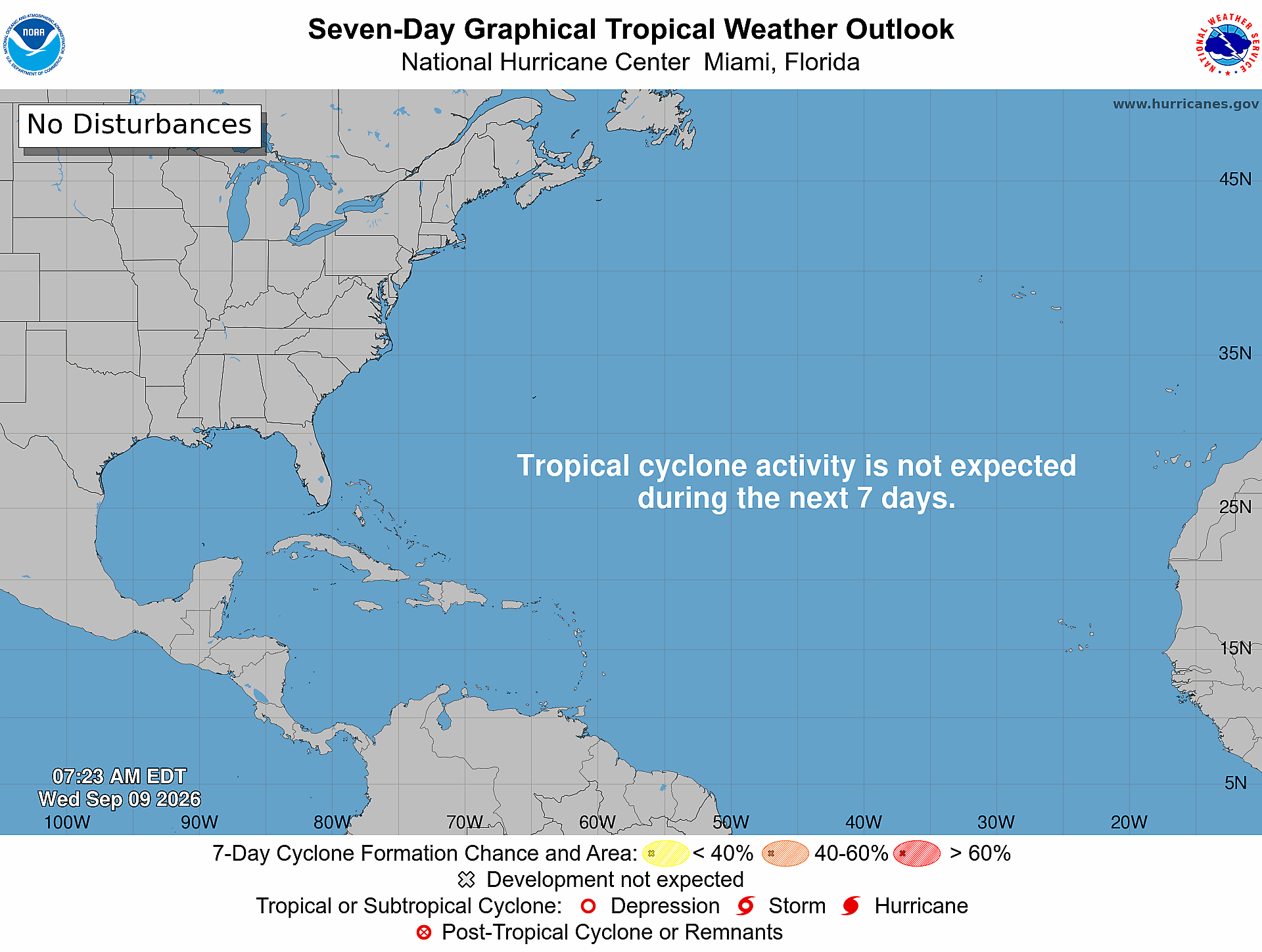
Here we are at the climatological peak of the Atlantic Basin tropical season and there is currently no activity whatsoever across the Atlantic Ocean. Map courtesy NOAA/NHC
Details
El Nino has received kind of bum rap in the media this year with all kinds of dire warnings even though there usually are some positive benefits depending on the location and time of year. To begin, a strong El Nino in the tropical Pacific Ocean is liable to increase total precipitation amounts across the western US during a winter season and - in this particular time period - this will be good news assuming the rainfall (and snowfall) is manageable as that part of the country has been rather dry for an extended time. In addition, an El Nino in the Pacific Ocean is usually an important inhibiting factor to the Atlantic Basin’s tropical season as it is correlated well with increased vertical wind shear in the main development region of the Atlantic Ocean. Vertical wind shear tends to suppress tropical cyclone development or intensification since it disrupts the circulation center of a tropical cyclone by tilting the storm’s vortex and often leading to an influx of cooler and dry air into the warm core.
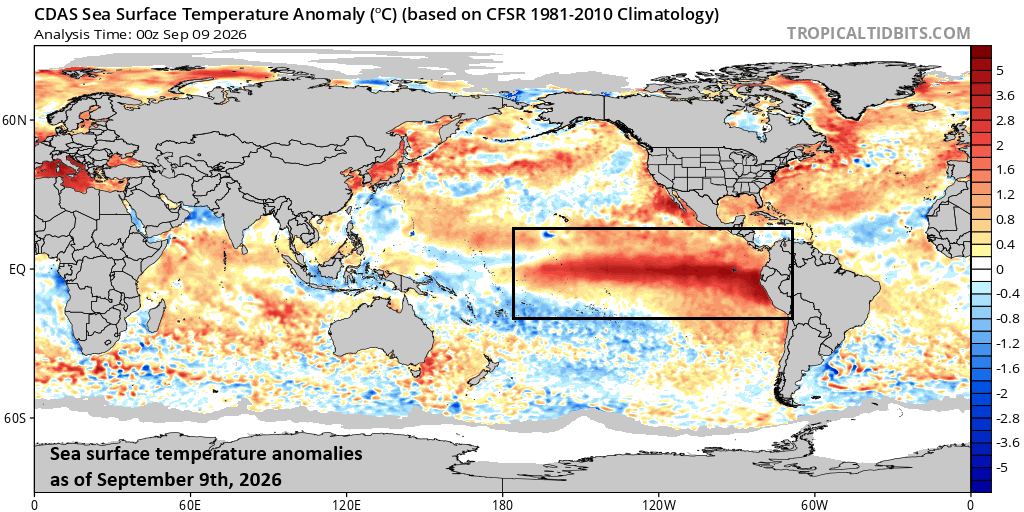
Very strong El Nino conditions continue across the equatorial Pacific Ocean (boxed in region) and it is combining with normal-to-below normal water temperatures in the tropical Atlantic to produce a quiet season in the Atlantic Basin. In fact, if no hurricane forms by Saturday in Atlantic, it will be the latest time in any tropical season without a hurricane since satellite records began (~1966). Map courtesy NOAA, tropicaltidbits.com
So far this summer tropical season there have been five named tropical storms in the Atlantic Basin (Arthur, Bertha, Cristobal, Dolly, Edouard), but none of these reached the required threshold for hurricanes of sustained winds of 74 mph or higher. And if this potential history making event is not enough with respect to the latest start to the hurricane season in the Atlantic Basin, there is another impressive record that has a chance of taking place. There were no landfalling hurricanes in the US during 2025 and if we can make it through this entire season without one then that would be the first time for such quite back-to-back years since 2009 and 2010. In fact, it has happened only six times since records began in 1851 according to Capital Weather. The last landfalling hurricane in the US was Hurricane Milton in October 2024, which came ashore as a category 3 storm in Siesta Key, Florida. The interesting thing about the quiet 2025 tropical season in the Atlantic is that there was no strong El Nino, but rather neutral conditions with water temperatures nearly normal in the equatorial part of the Pacific.
Meteorologist Paul Dorian
Arcfield
arcfieldweather.com
Follow us on Facebook, Twitter, YouTube
Video discussion: