One of the key factors cited in the Vencore Weather Winter Outlook (http://www.vencoreweather.com/2015-2016-winter-outlook) for a snowier-than-normal winter in the Mid-Atlantic region was the expectation for high-latitude blocking episodes this winter based on favorable signals from the Arctic Oscillation (AO) index, autumnal snowpack across Siberia, and on-going relatively quiet solar activity. In all likelihood, it appears we will have a stretch of at least two or three weeks with amazingly strong high-latitude blocking over places like Canada and Greenland which will increase chances for sustained cold air outbreaks into the Northeast US. A second important factor cited for more snow-than-normal this winter was the expectation that the strong El Nino phenomenon in the tropical Pacific Ocean would add moisture and energy to the southern branch of the jet stream. Indeed that appears ready to take place simultaneously with the high-latitude blocking as multiple storms are likely to trek from California to the Gulf of Mexico and then into the Northeast US during the next few weeks. All in all, it is looking very interesting and quite active for at least the next two or three weeks and accumulating snow is a good bet in the Mid-Atlantic region.
Read More
In all likelihood, El Nino in the tropical Pacific Ocean reached its peak intensity level several weeks ago and will completely flip to La Nina conditions later this year. This naturally occurring oceanic cycle that produces warmer-than-normal sea surface temperatures (SSTs) in the equatorial region of the Pacific Ocean began in earnest early last year and strengthened throughout 2015. It has become comparable in strength to the very strong El Nino events of 1997-1998 and 1982-1983 although the warmest region relative-to-normal has set up in a different location (current El Nino "centrally-based", 1997-1998 "eastern-based"). While the demise of this current El Nino event has likely begun - make no mistake about it - there will still be significant ramifications for the next few months in many places around the globe. By later this year, colder-than-normal sea surface temperatures are quite likely to appear in the tropical Pacific Ocean as suggested by numerous computer models and this flip to La Nina will also have widespread consequences.
Read More
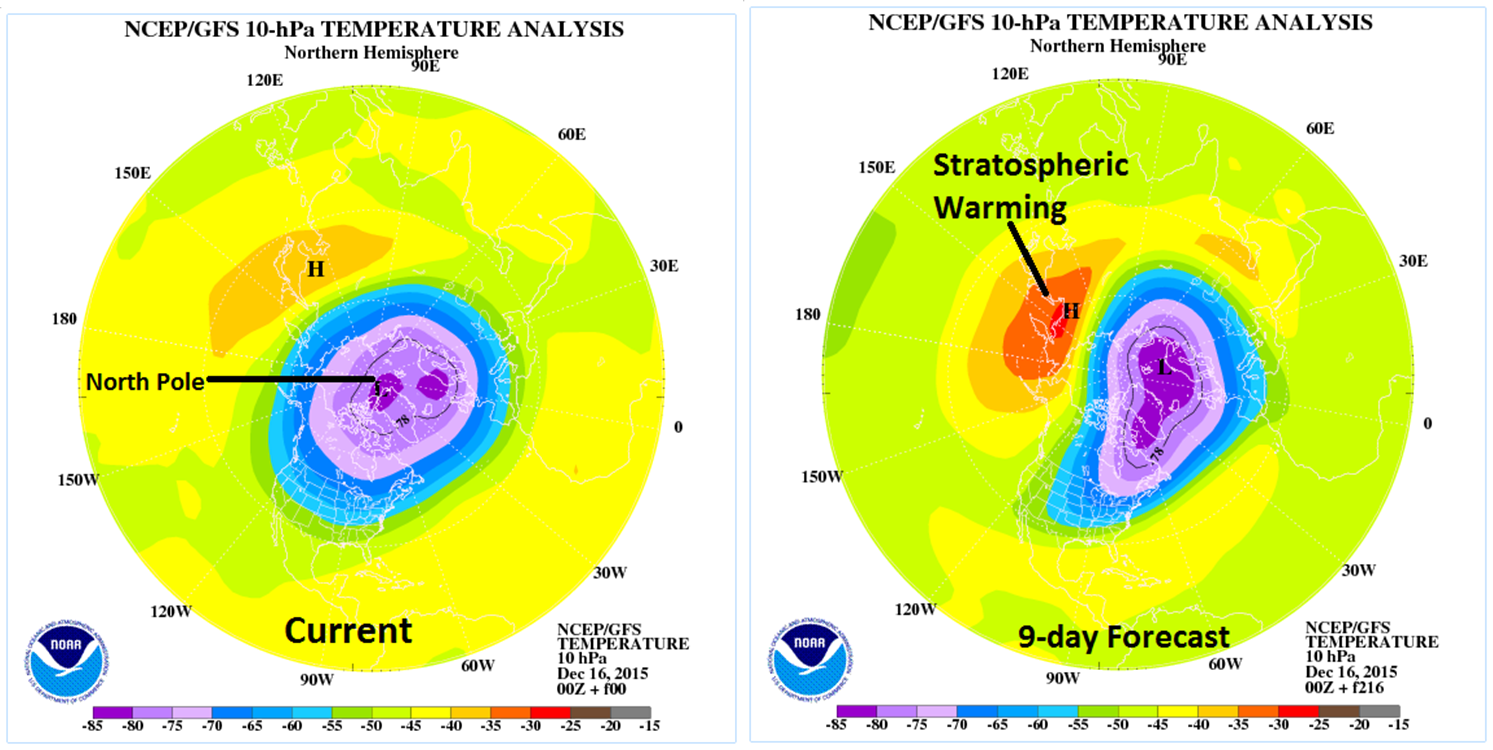
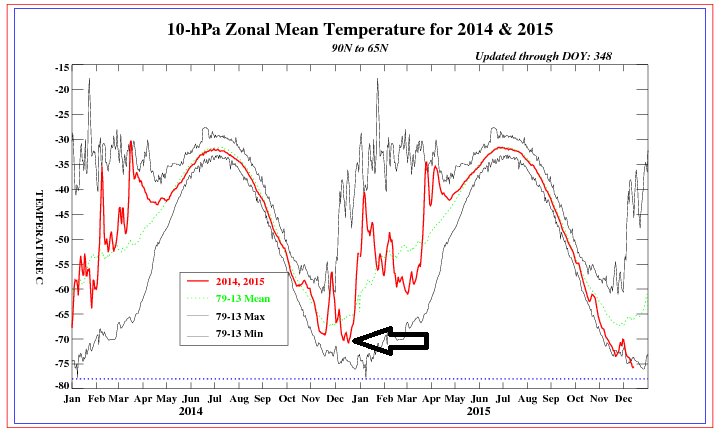
We’ve talked for several days about several signals (“teleconnections”, stratospheric warming, MJO) that pointed to an important change coming in the overall weather pattern that would bring us much closer-to-normal temperatures by the beginning of the New Year and more sustained cold air outbreaks during the month of January and perhaps beyond. There is no change at all in that outlook. In fact, there are even signs for below-normal cold air outbreaks in the Mid-Atlantic region during the next few weeks beginning with an Arctic blast set to arrive for Monday and Tuesday of next week. Furthermore, now that the colder pattern seems to be settling into the Mid-Atlantic region, it is time to monitor potential threats for snow and indeed the period about 10-15 days from now looks quite ripe with storminess potential for the Mid-Atlantic region.
Read More
The month of December has been much warmer-than-normal in the Mid-Atlantic region (PHL +13.8°, DCA +11.3°,NYC +13.8°), but there are numerous signs that a significant pattern change is coming which will allow for much more in the way of sustained cold air outbreaks in the area. The first two signals suggesting a pattern change – stratospheric warming and a tropical disturbance known as the Madden Julian Oscillation (MJO) – have been discussed already in recent postings on our “Climate Info” page: http://www.vencoreweather.com/blog?category=Climate%20Info ). Now there are other “teleconnection” signals that also suggest a pattern change is coming to the Mid-Atlantic region for the month of January and perhaps even beyond which will bring far different weather than what we experienced during this potentially record-breaking warm month of December.
Read More
The month of December has been much warmer-than-normal in the Mid-Atlantic region and there are at least two more widespread record-breaking days to come in the near future. Longer term, however, there are signals for an important pattern change in the eastern states as we begin the New Year. One of the signals for a pattern change is connected to a tropical disturbance called the Madden Julian Oscillation (MJO). Its projected changes over the next couple of weeks as depicted by a reliable computer forecast model (Euro) suggest changes are coming here by the beginning of January.
Read More
The month of December has been much warmer-than-normal in the Mid-Atlantic region and there are several warm days still to come during this week and next. Indeed the month of December could turn out to be the warmest ever in much of the region aided in large part by the strong El Nino oceanic cycle in the tropical Pacific Ocean. So far this month temperatures have averaged 10.6°F above normal in Philadelphia, 11.3°F above normal in Central Park, NY, and 7.6°F above normal in Washington, D.C (Reagan National Airport). There are signs; however, for an important change in the overall weather pattern that is likely to occur around the New Year’s Day holiday period and it should bring quite a change in temperatures to the eastern states from well above normal to much closer-to-normal.
Read More
Despite an upcoming cold weekend, our recent warm weather pattern will re-emerge next week and it’ll likely continue right past Christmas Day. The month of December so far has been well above normal in the Mid-Atlantic region (+10.8 at PHL, +8.1 at DCA, +11.2 at Central Park) and there will be a setback this weekend, but the eastern US will warm up significantly next week while the western states cool down dramatically. In fact, record warmth is likely in many areas east of the Mississippi River by the middle of next week.
Read More
The first week of December was quite mild in the I-95 corridor with temperatures averaging 6.5 degrees above normal in Philadelphia, 6.2 degrees above normal at Central Park in New York and 3.1 degrees above normal at Reagan National Airport in Washington, D.C. This week also looks relatively mild with high temperatures likely reaching or even exceeding the 60 degree mark in parts of the region by this weekend. Looking ahead, however, there are signs that the upper atmosphere pattern will change to allow for more normal cold to arrive as we progress through the second half of December.
Read More